

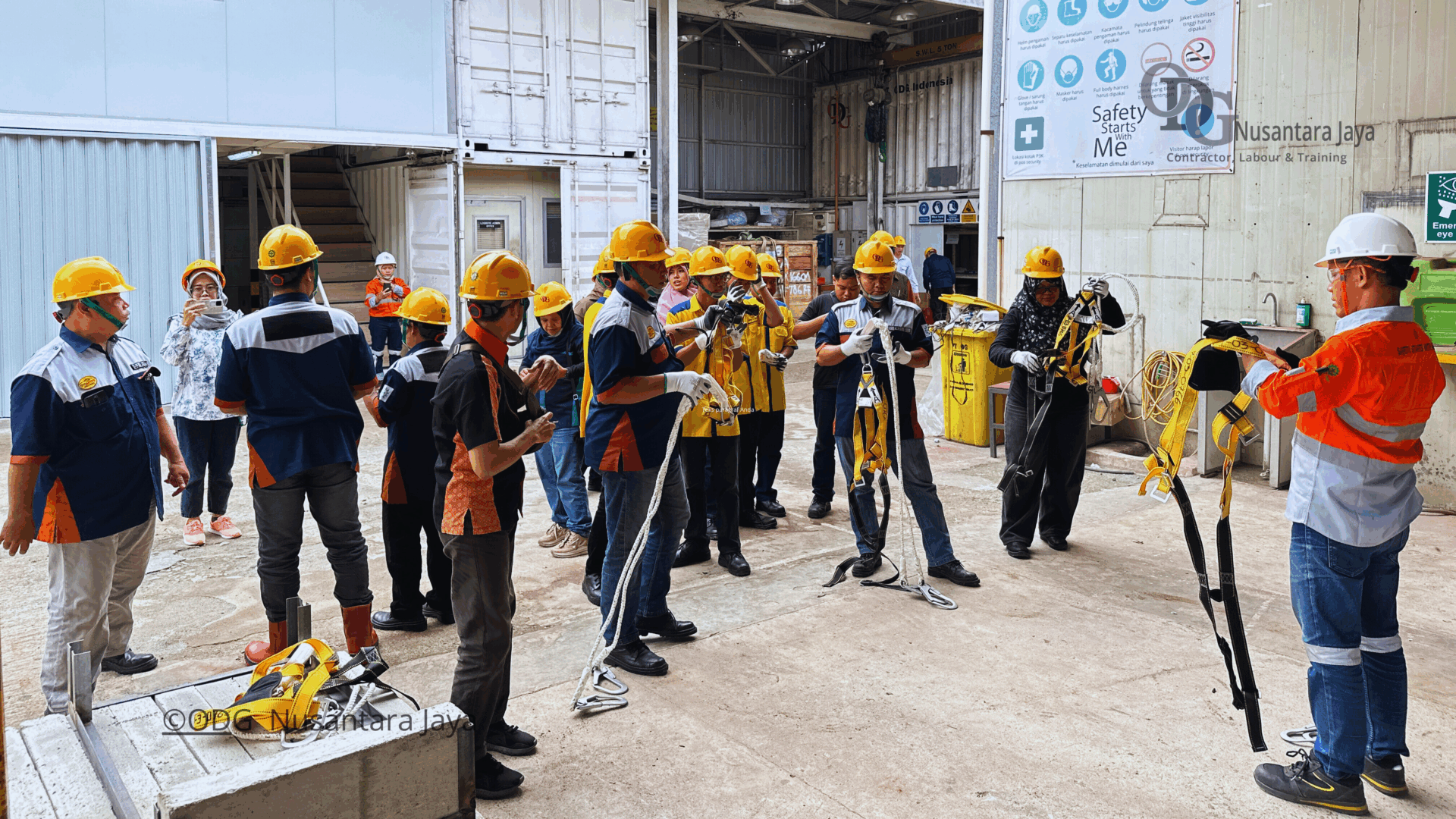
Occupational safety plays a key role in project success. This applies to construction, industrial projects, and heavy industry. Project sites involve high-risk environments. Many workers, heavy equipment, and hazardous activities operate simultaneously.
Without proper safety systems, accidents can disrupt operations. Delays, financial losses, and safety incidents may occur. Implementing workplace safety at project sites helps companies control risks systematically. Each task can proceed in a safer and more controlled manner.
Risk Characteristics of Project Areas
Project sites differ from permanent operational facilities. Multiple disciplines often work in the same area. Civil, mechanical, and electrical tasks overlap during daily operations.
Heavy equipment and material movement increase exposure to hazards. Cranes, forklifts, and trucks operate near workers. High-risk activities are also common. These include working at height, lifting operations, hot work, and confined space tasks.
Environmental conditions may change quickly. Weather, limited access, and open areas increase safety challenges. The involvement of multiple contractors adds coordination risks.
Regulations and Safety Standards
Project safety must comply with national regulations and international standards. Occupational safety laws provide the legal foundation for protection. Safety management systems support structured risk control.
ISO 45001 helps organizations establish consistent safety practices. Project owners or main contractors may require additional HSE standards. Compliance reflects operational readiness and professional capability.
Hazard Identification and Risk Control
HIRADC is the foundation of project risk management. The process begins with hazard identification for each activity. Risks are assessed based on likelihood and severity.
Appropriate control measures are then applied. These include engineering control, administrative control, and PPE use. Regular reviews ensure risk control remains effective.
PPE and Supporting Safety Systems
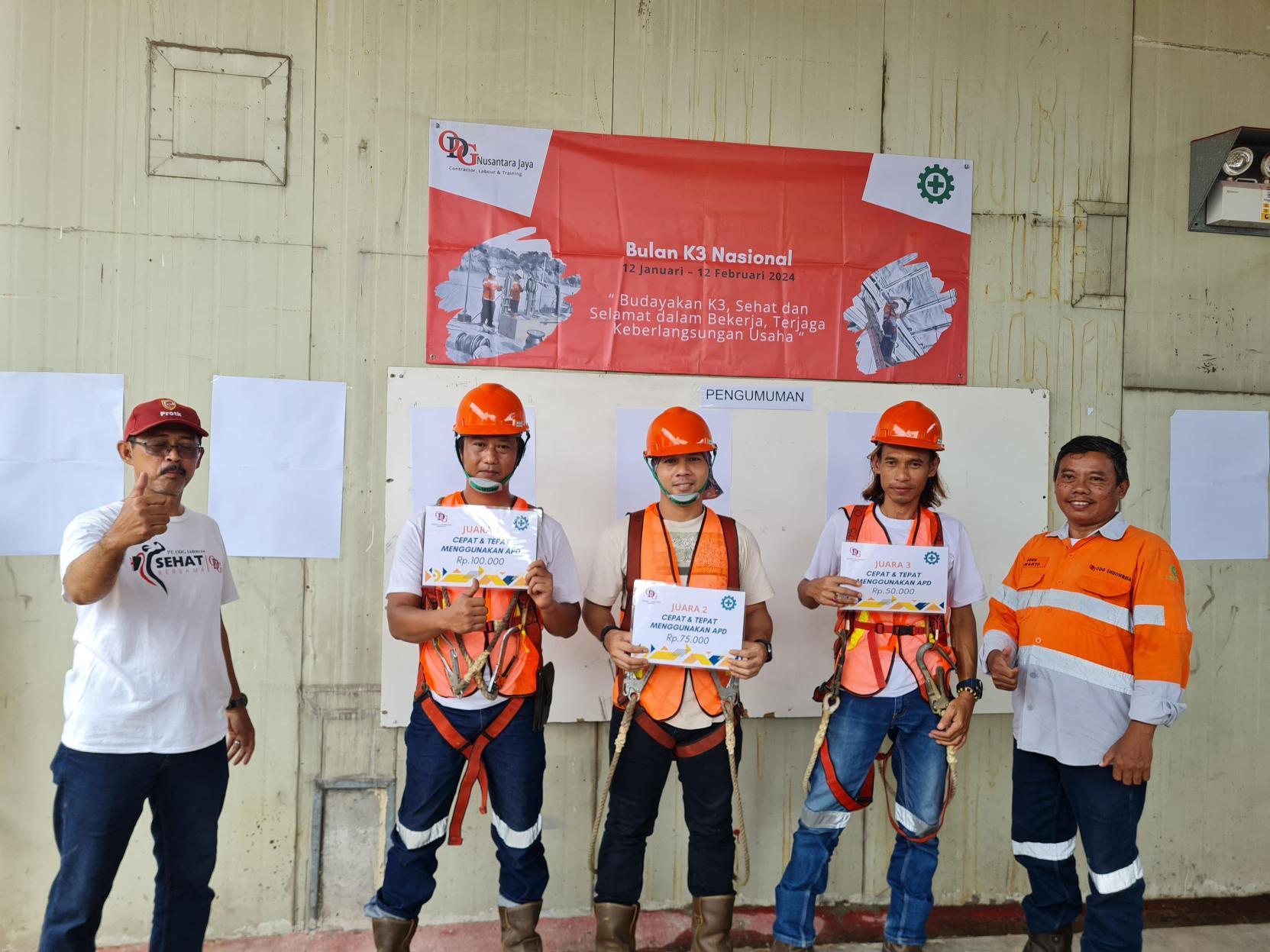
PPE is mandatory for all project personnel. Common equipment includes safety helmets, safety shoes, safety vests, safety glasses, and work gloves. Full body harness is required for work at height.
Supporting systems strengthen workplace safety at project sites. These systems include fire extinguishers, safety signage, LOTO systems, and emergency response plans. Integration improves overall site safety.
Project safety goes beyond regulatory compliance. It is a strategic investment in productivity and sustainability. Strong safety systems help reduce accidents and protect project continuity.
Occupational safety is not an additional cost, but an investment in the smooth running and success of your project.