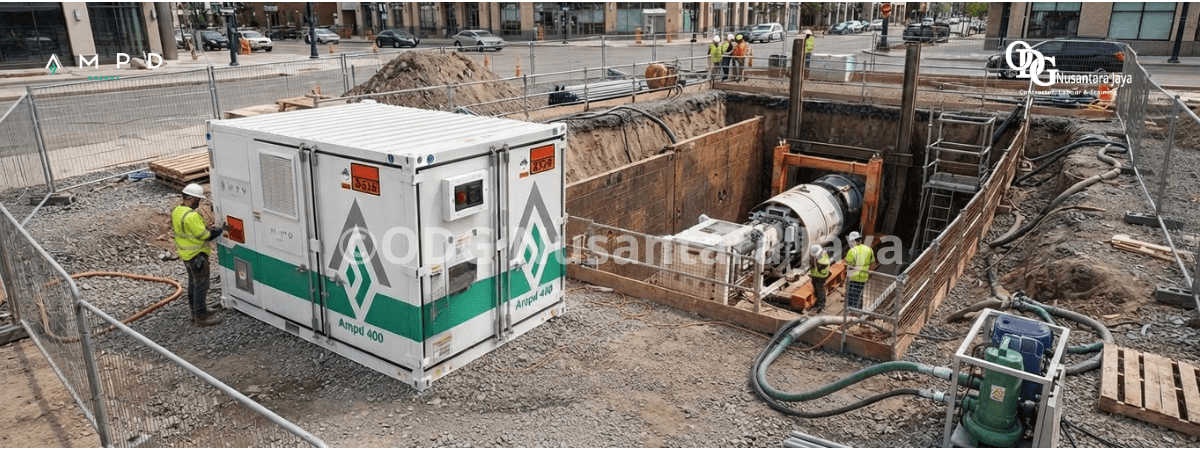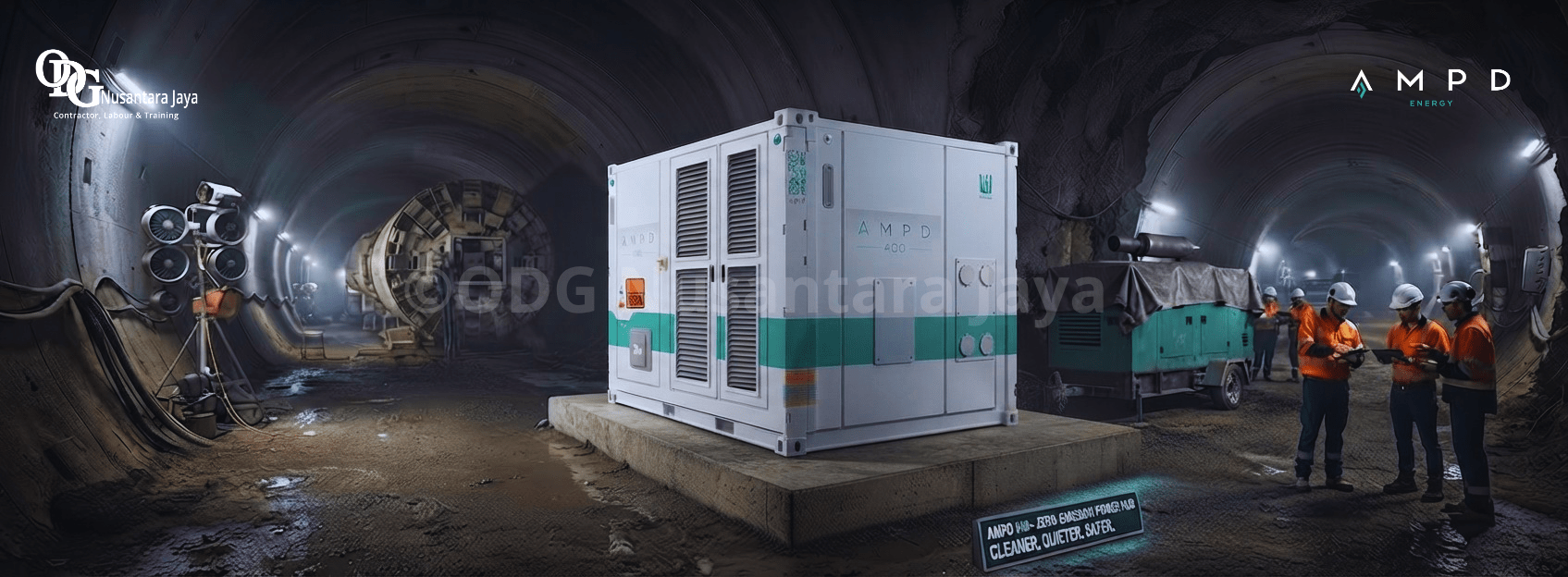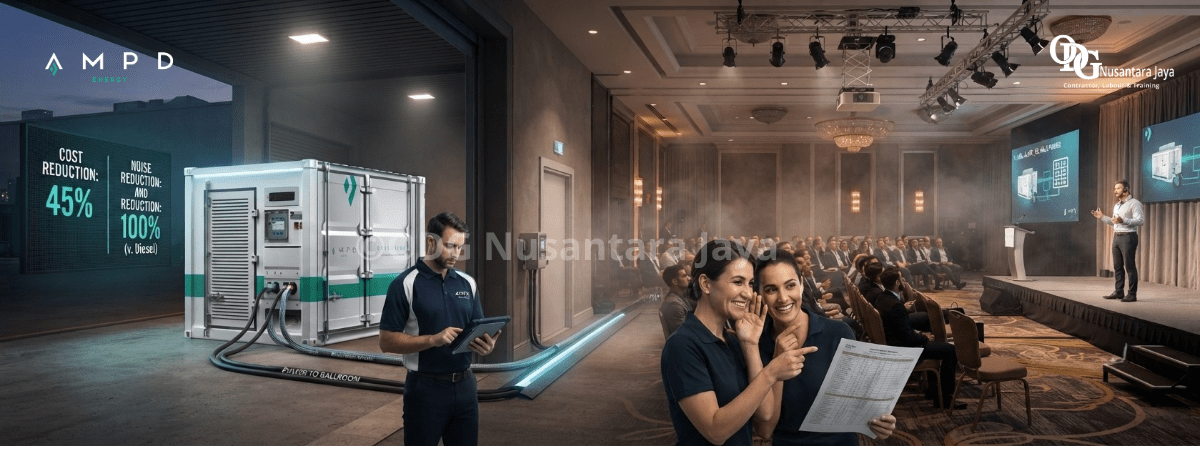

You may have heard this term often: BESS. Battery Energy Storage System.
In business media, it appears alongside news of billion-dollar renewable energy investments. In engineering forums, it is debated with intimidating technical terminology. In ESG reports of multinational companies, it appears as one of the pillars of decarbonization.
But for a Site Manager at a mining site in Kalimantan, a Project Director of a toll road project in Sumatra, or an Operations Manager at a manufacturing plant in Karawang — the question is much simpler:
“Can this replace my diesel generator? And does the math make sense?”
This article answers both questions — without unnecessary jargon, with numbers you can bring into a meeting tomorrow.
BESS: A DEFINITION THAT IS ACTUALLY USEFUL
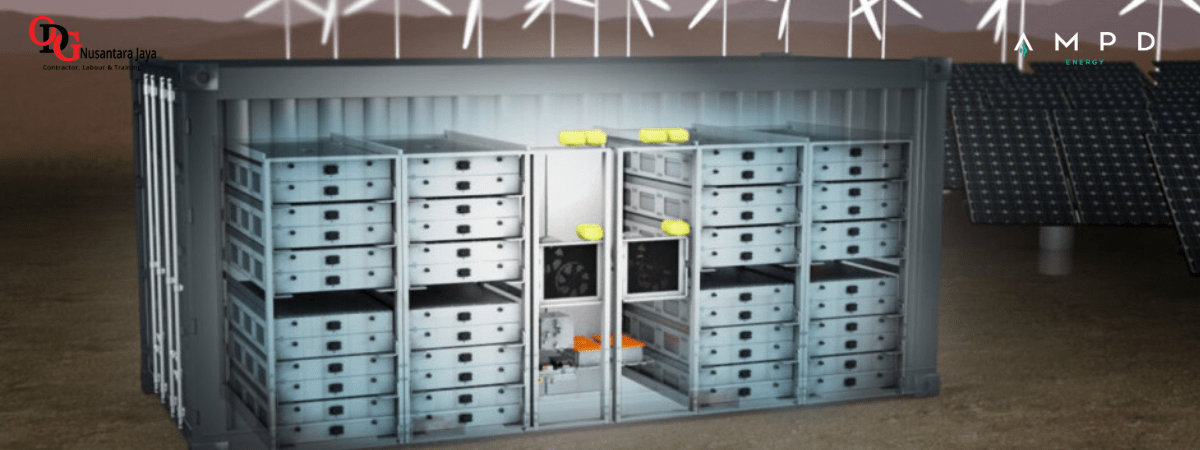
BESS, or Battery Energy Storage System, is a system that stores electrical energy in batteries for later use.
But that definition is too simple to understand why BESS is revolutionizing how industries manage energy. To understand it, we need to distinguish BESS from two technologies you already know:
BESS vs. Diesel Generator
A diesel generator produces energy by burning fuel. BESS stores existing energy (from the grid, solar panels, or the generator itself) and releases it when needed.
This seemingly simple difference has very large implications:
No fuel is burned → no on-site emissions
No rotating machinery → almost no noise
No warm-up time → power is available in milliseconds
No fuel logistics → no dependency on fuel supply chains
BESS vs. Conventional UPS
The UPS (Uninterruptible Power Supply) you are familiar with in server rooms or ICU rooms is a smaller version of BESS — typically with a capacity of 1–50 kVA and backup duration of 10–30 minutes.
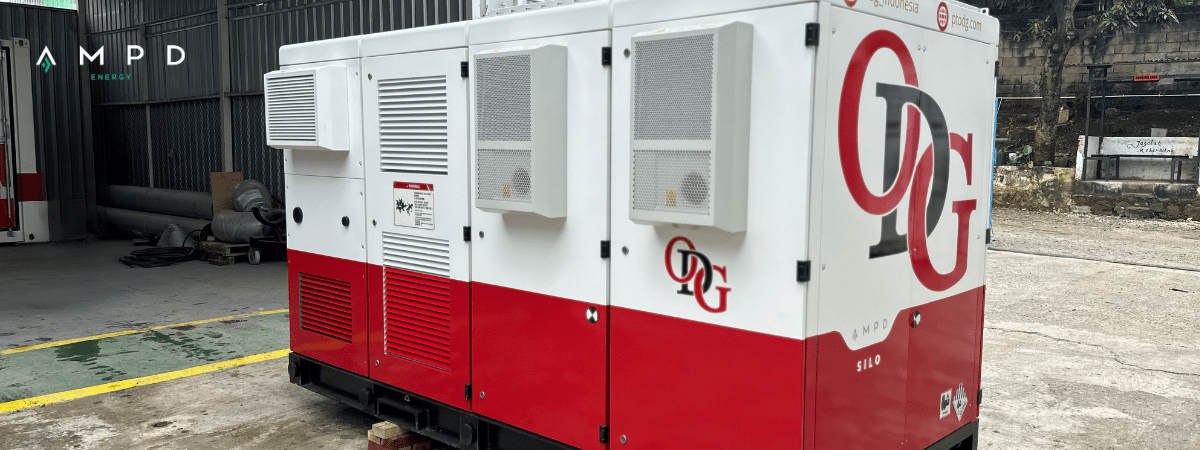
Industrial-grade BESS like AMPD operates on a completely different scale:
Output capacity: 200–600+ kVA (equivalent to 1–3 large diesel generators)
Energy storage: 200–500+ kWh (backup duration in hours, not minutes)
Designed for: heavy industrial loads, motor start surge, outdoor deployment
HOW BESS WORKS: A TECHNICAL EXPLANATION THAT IS NOT BORING
An industrial BESS system consists of four main components:
1. Battery Cells — The Heart of the System
Modern batteries for industrial applications use Lithium Iron Phosphate (LFP) chemistry. Why LFP instead of conventional lithium-ion?
Thermal stability: LFP is resistant to thermal runaway (less risk of fire) — critical for outdoor industrial deployment
Cycle life: LFP can be charged and discharged thousands of times without significant degradation (vs. hundreds of cycles for standard lithium-ion)
Safety: LFP meets international IEC standards and is classified as a safer chemistry
AMPD uses CATL LFP cells — CATL is the world’s largest battery manufacturer, supplying Tesla, BMW, Volkswagen, and now forming the backbone of top-tier industrial BESS systems.
2. Battery Management System (BMS) — The Brain
The BMS is the computer that controls every aspect of battery operation:
Monitoring voltage, current, and temperature of each cell
Balancing charge across cells to ensure optimal performance
Protection against over-charge, over-discharge, and short circuits
Real-time communication with external monitoring systems
3. Power Conversion System (PCS/Inverter) — The Electrical Translator
Batteries store energy in DC (direct current). Industrial equipment uses AC (alternating current). The PCS converts both directions:
During charging: AC from grid/generator is converted to DC
During discharging: DC from batteries is converted to AC
The quality of the PCS determines power quality. AMPD uses high-grade PCS that delivers clean power output, free from voltage fluctuations and harmful harmonics.
4. Thermal Management System — The Temperature Guardian
Batteries operate optimally within a specific temperature range. In Indonesia’s climate, where outdoor temperatures can reach 38–42°C, AMPD’s internal HVAC system maintains battery temperature within 0–45°C — ensuring performance and product lifespan are not compromised.
THREE BESS OPERATING MODES MOST RELEVANT FOR INDONESIA
BESS is not “install and forget.” Its value depends on how it is configured for each site’s energy profile.
Mode 1: Peak Shaving
For: Facilities with grid connection but high peak tariffs, or oversized generators due to occasional peak loads.
How it works: BESS stores energy during low demand and releases it during peak demand.
Typical savings: 20–40% of electricity or generator cost
Mode 2: Backup Power (Industrial UPS)
For: Critical facilities with zero tolerance for downtime — hospitals, data centers, telecom, continuous production.
How it works: BESS stays fully charged. When grid fails, it instantly takes over. The generator starts (30–60 seconds). Once stable, BESS recharges.
No gap. No interruption.
Main value: Eliminates downtime cost
Mode 3: Diesel Displacement / Generator Optimization
For: Remote sites with 100% diesel dependency.
How it works: Generators operate only to charge BESS at optimal load (70–80%). BESS supplies the load, including peak surges.
Typical savings: 50–82% fuel and maintenance cost
Energy Cost Comparison
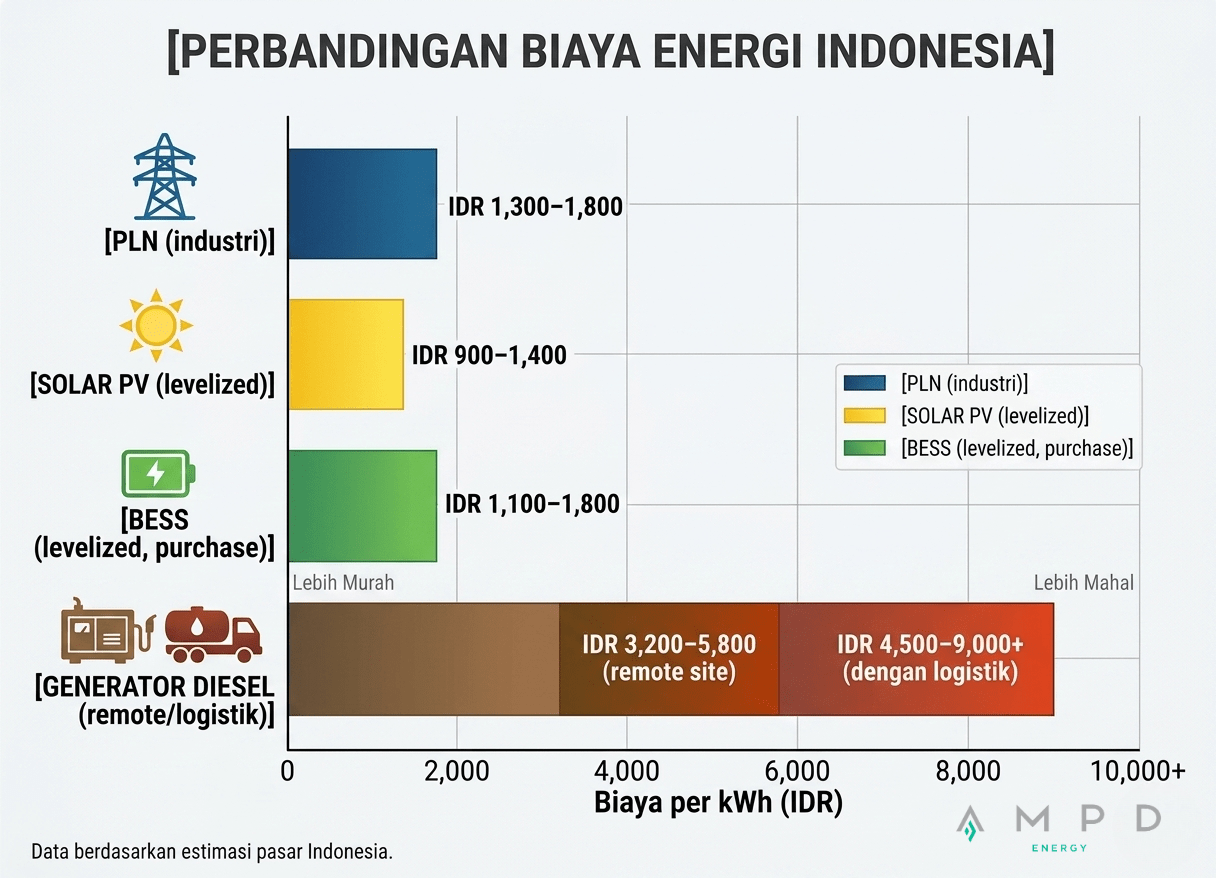
BESS is already cheaper than diesel in many scenarios.