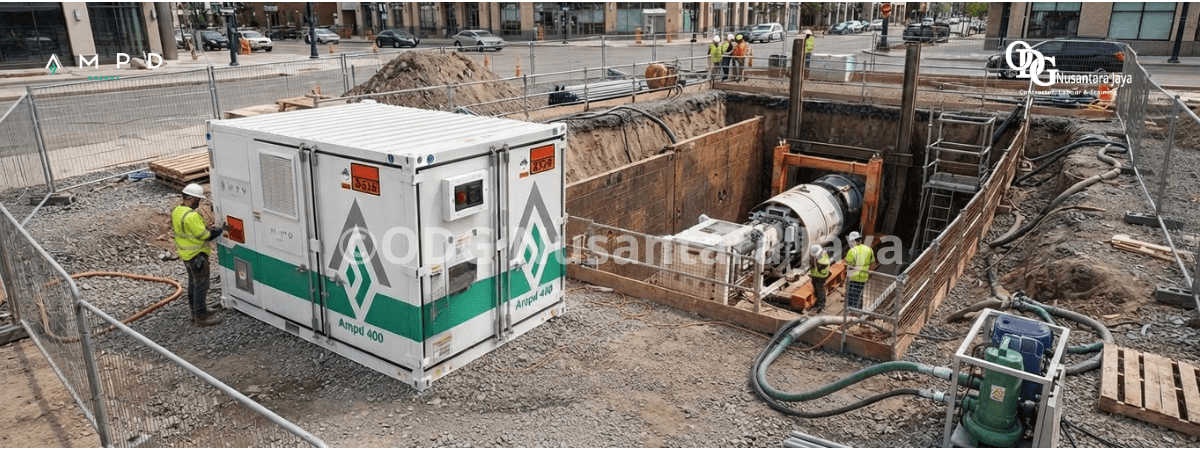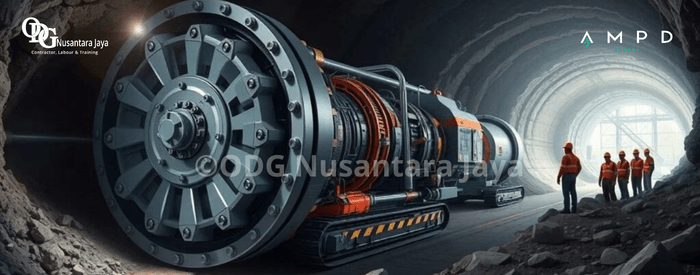

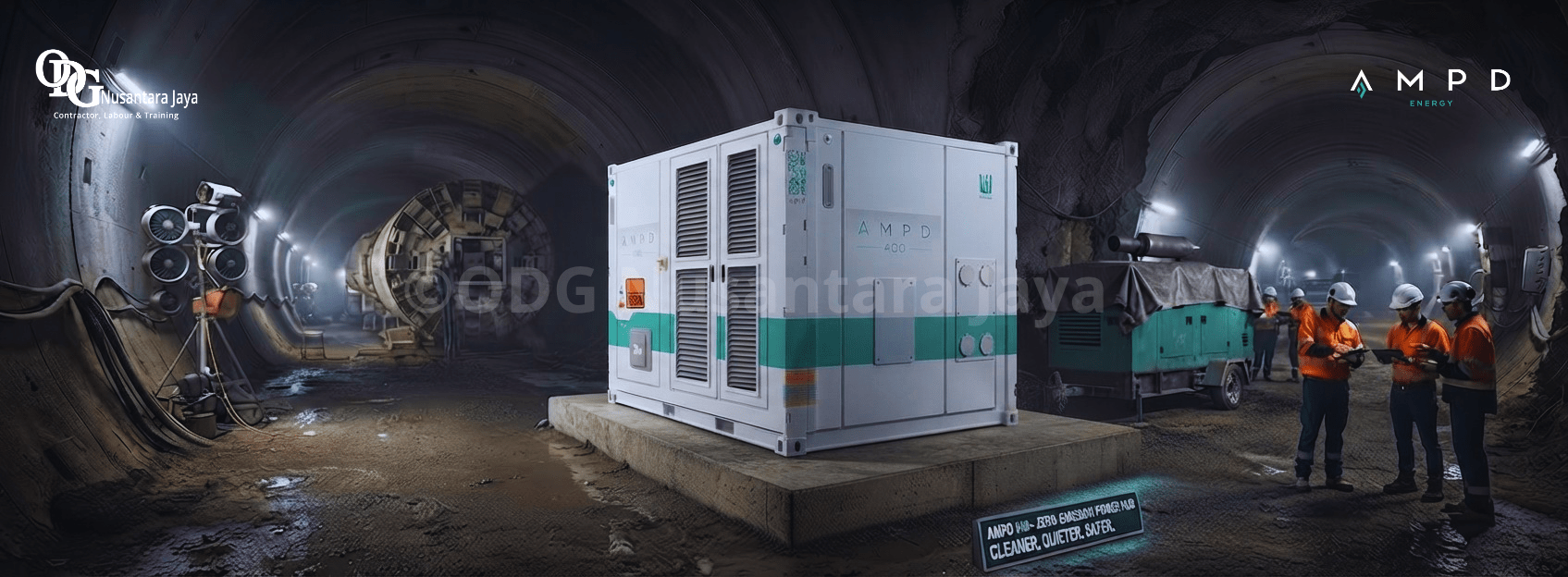
Tunneling is one of the most energy-intensive construction operations. A Tunnel Boring Machine (TBM) can require hundreds of kilowatts during operation.
Ventilation, dewatering pumps, lighting, and emergency systems also require reliable power. These requirements become more challenging inside confined underground environments.
Diesel generators remain common across construction projects. However, underground applications create additional challenges for diesel-based power systems.
Exhaust emissions, fuel logistics, noise, and maintenance can increase operational complexity. These factors encourage contractors to consider alternative power strategies.
Power Challenges in Tunneling Projects
TBM power demand can change significantly throughout the construction process. Boring operations can create very different loads from maintenance activities.
These load changes can create voltage fluctuations and power quality issues. The power system must respond quickly to sudden changes.
Other systems also require continuous power during project operations. Ventilation systems maintain acceptable air conditions inside underground work areas.
Dewatering systems control water infiltration and protect the working environment. Emergency lighting and communication systems also require reliable power.
Key Power Challenges
Major power challenges in tunneling projects include:
- TBM power demand: Load can change significantly between operating phases.
- Continuous systems: Ventilation and dewatering require stable power supply.
- Confined space: Exhaust emission control becomes an important safety consideration.
- Long cable distances: Underground distribution can experience significant voltage drop.
- Fuel logistics: Diesel delivery and storage increase operational complexity.
- Power quality: Large motors can create starting surges and load fluctuations.
K3 and Environmental Compliance
Underground construction presents different safety risks from conventional surface construction. Air quality requires consistent monitoring and appropriate control measures.
Indonesia’s occupational safety framework also requires companies to manage workplace risks systematically. Project controls should reflect the specific hazards of underground operations.
Reducing emission sources can support a broader environmental and safety strategy. Ventilation can control contaminants but also creates additional energy demand.
Reducing diesel dependency can therefore provide operational and environmental benefits. Energy storage can support this strategy through flexible power management.

Case Study: Jakarta Underground Power Demand
A relevant example comes from the Jakarta Sewerage Development Project Zone 1. The project used a microtunnel boring machine in Pluit, North Jakarta.
The recorded peak load reached approximately 566 kW. Continuous demand remained around 385 kW.
Standby demand was approximately 60 kW. Operations ran across two shifts and six working days each week.
This profile demonstrates the importance of flexible power management. The system must follow changing loads without compromising operational reliability.
The urban environment also creates additional fuel logistics challenges. Noise and exhaust emissions can affect surrounding communities and project compliance.
How AMPD Energy Supports Tunneling
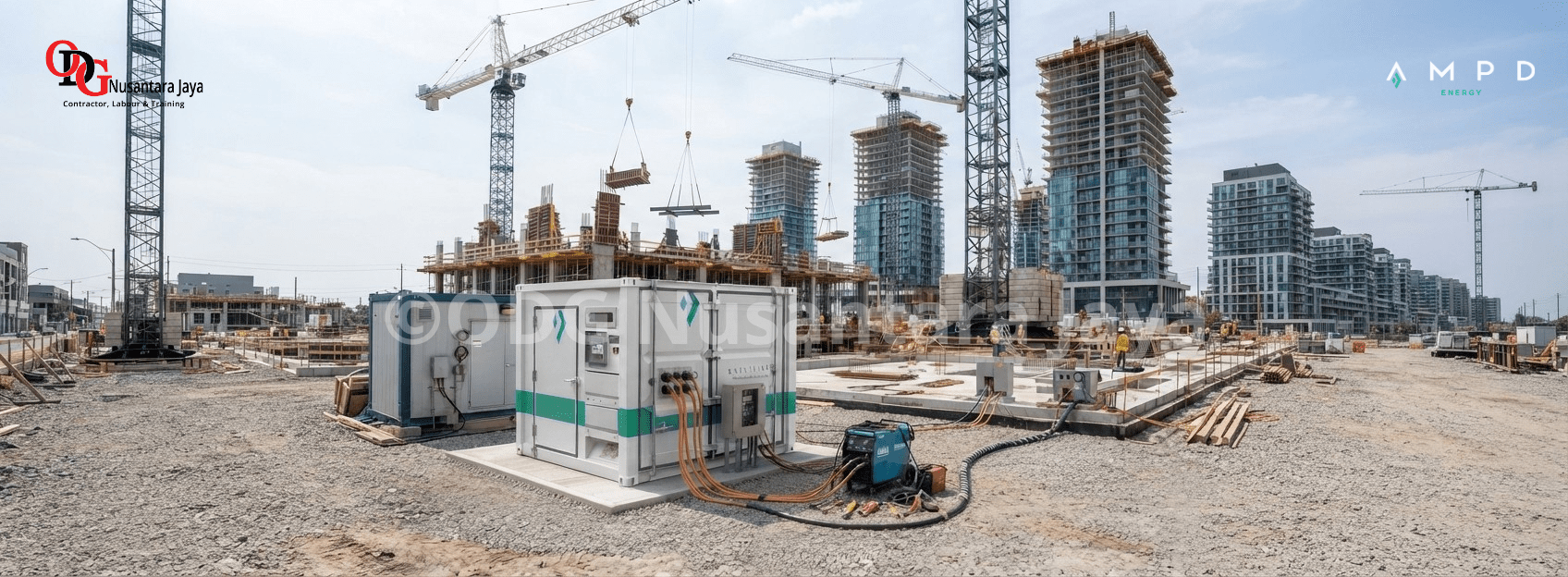
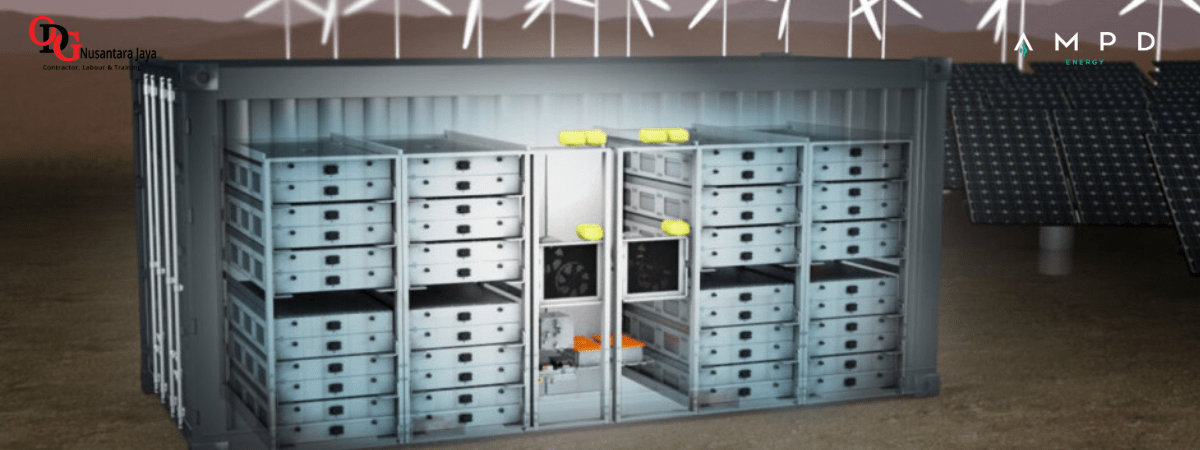
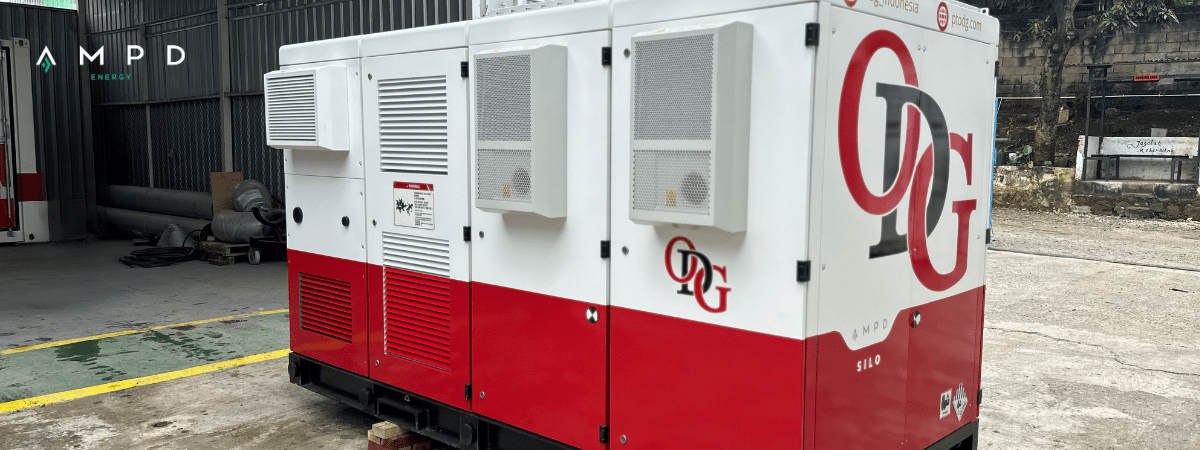
AMPD Energy provides Battery Energy Storage System (BESS) solutions for temporary power applications. The technology can reduce dependency on conventional diesel generators.
One approach uses AMPD as a surface-to-shaft power buffer. The unit operates on the surface and connects with grid power or another generation source.
The system can manage peak demand before power enters the underground distribution network. This approach can improve power quality and reduce generator loading.
A second approach uses the unit for underground auxiliary power. The system can support local ventilation, emergency lighting, communication, and auxiliary equipment.
BESS also provides real-time monitoring of power consumption. Engineering teams can use this data to understand operational energy patterns.
Configuration for Medium-Sized Projects
For projects with continuous loads around 300–400 kW, BESS configuration should follow detailed load profiling. AMPD 400 can be considered for suitable applications.
AMPD 400 provides approximately 428 kVA of nominal output. Its energy capacity reaches approximately 430 kWh.
The system can also provide up to approximately 595 kVA for 10 seconds. This capability can help manage temporary load surges.
The unit can receive power from grid supply or surface-based generators. It can then support the project’s underground distribution network.
With the right operating strategy, BESS can reduce diesel consumption. Actual savings depend on load profile, operating hours, and site conditions.
Why Energy Storage Is Becoming More Relevant
Energy storage for tunneling provides a different approach to managing underground power requirements.
The technology does more than reduce fuel consumption. It can also improve power quality and operational flexibility.
BESS produces no tailpipe emissions during operation. This advantage can become important where projects have strict emission control requirements.
Real-time monitoring also provides better visibility into energy consumption. This information can support more accurate engineering and operational decisions.
Build a Better Underground Power Strategy
Tunneling projects require power systems that are reliable, flexible, and suitable for site conditions. Diesel alone may not always provide the most efficient solution.
BESS can become part of a hybrid power strategy for underground construction. The solution should follow load profiles, operating hours, and site requirements.
PT ODG Nusantara Jaya can support power assessments for tunneling and underground construction projects.
Our technical team can evaluate load profiles, distribution systems, backup requirements, and BESS opportunities.
Contact PT ODG Nusantara Jaya to discuss your project requirements and determine the right power configuration.
Whatsapp : +62 811-8111-3032
Email : sales@protk.co.id