
Imagine the 47th pipe segment being pushed by the jacking frame.
Hydraulic pressure is already approaching its maximum operating point.
The laser alignment shows the pipe exactly on target.
Then the power suddenly fails.
Even a short interruption can stop the hydraulic system.
It can also affect pipe alignment and increase the risk of rework.
The challenge becomes greater when projects operate in dense urban areas.
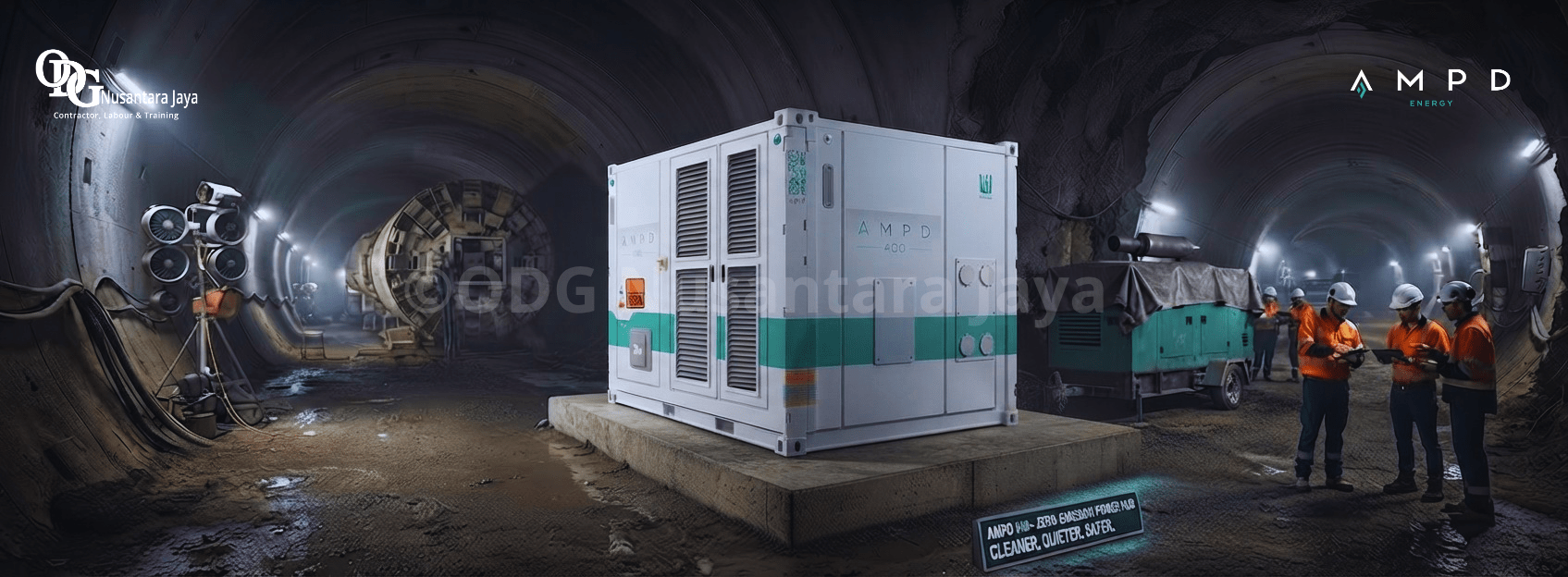
Diesel generators create noise, emissions, and regular fuel handling requirements.
Therefore, power supply pipe jacking requires a more reliable strategy.
Battery Energy Storage Systems or BESS can become an important part of that strategy.
Why Power Continuity Matters
Pipe jacking and microtunneling require stable power throughout the operation.
The jacking frame needs hydraulic power to push each pipe segment.
The slurry system also requires continuous circulation during boring.
A stopped pump can cause slurry settlement and increase blockage risks.
The bentonite lubrication system also requires consistent operation during jacking.
Insufficient lubrication can increase friction between the pipe and surrounding ground.
Any power interruption can affect productivity and operational safety.
Therefore, the power system must respond quickly to changing load conditions.
Challenges of Urban Pipe Jacking Projects
Pipe jacking projects often operate beneath active roads.
They may also operate near residential and commercial areas.
These conditions make diesel generators increasingly challenging to manage.
Generator noise can disturb nearby communities during construction.
Diesel emissions also require careful environmental and HSE management.
Contractors must consider the project’s impact on surrounding areas.
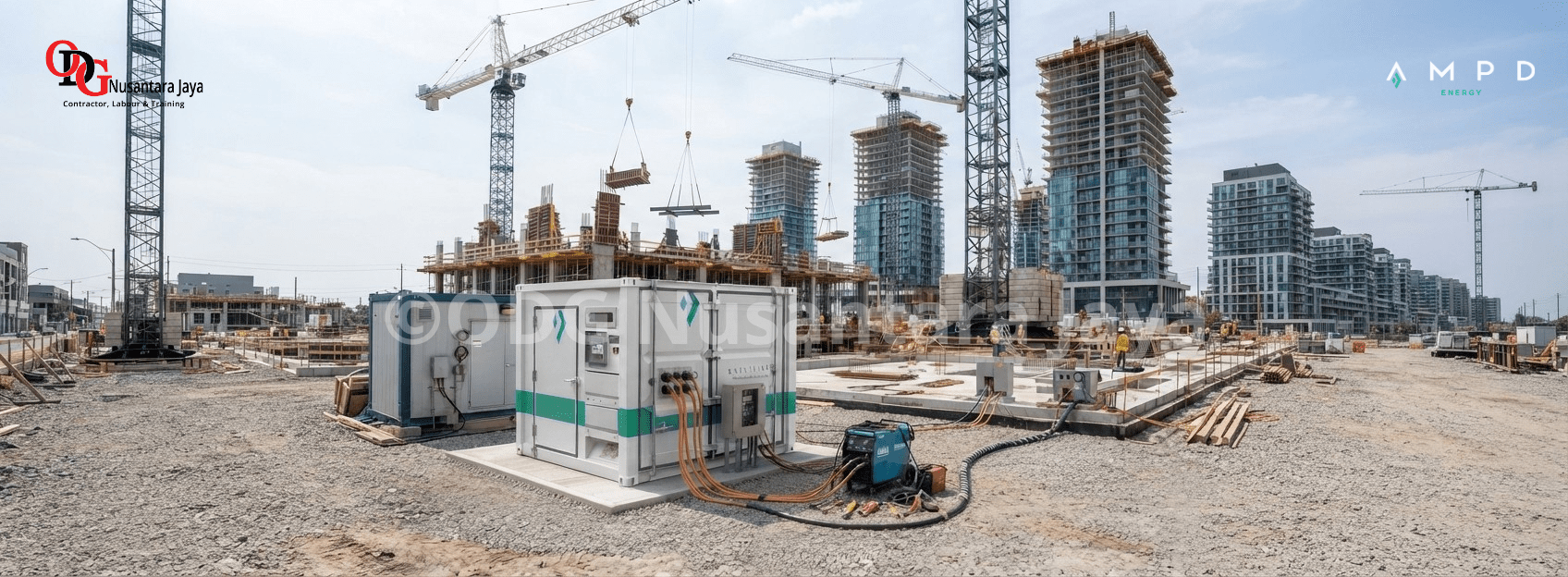
Launching shafts often provide limited space for power equipment.
Therefore, the power solution must fit the available site footprint.
BESS provides a different approach for these requirements.
Battery mode can deliver power without tailpipe emissions.
Microtunneling Has a Dynamic Load Profile
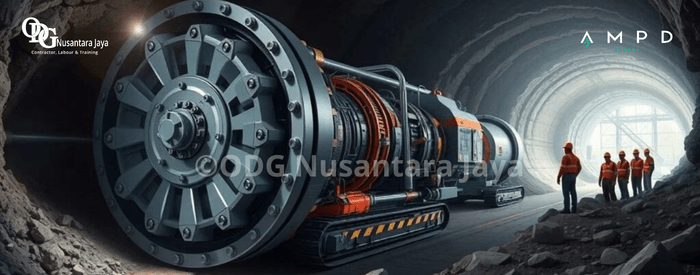
Microtunnel Boring Machines can experience changing load conditions during operation.
Boring mode requires different power than idle or maintenance mode.
The slurry separation plant usually operates with a more stable load.
Meanwhile, the jacking frame can create high demand during each push cycle.
Intermediate jacking stations can also increase power demand during specific operations.
Therefore, the power system must respond quickly to load changes.
Energy storage can help manage these peak loads.
BESS can also help maintain power quality for sensitive equipment.

Jakarta Sewerage Development Project Reference
A relevant example comes from the Jakarta Sewerage Development Project Zone 1.
The project used a slurry MTBM in Pluit, North Jakarta.
The project power profile included the following characteristics:
- Peak load of approximately 566 kW.
- Continuous load of approximately 385 kW.
- Standby load of approximately 60 kW.
- Two operating shifts.
- Six operating days per week.
This profile demonstrates a significant power requirement during boring operations.
However, the overnight standby requirement is considerably lower.
This creates an opportunity to reduce generator operation during nighttime.
BESS can supply critical standby loads using stored battery energy.
Hybrid Power Strategy with AMPD Energy
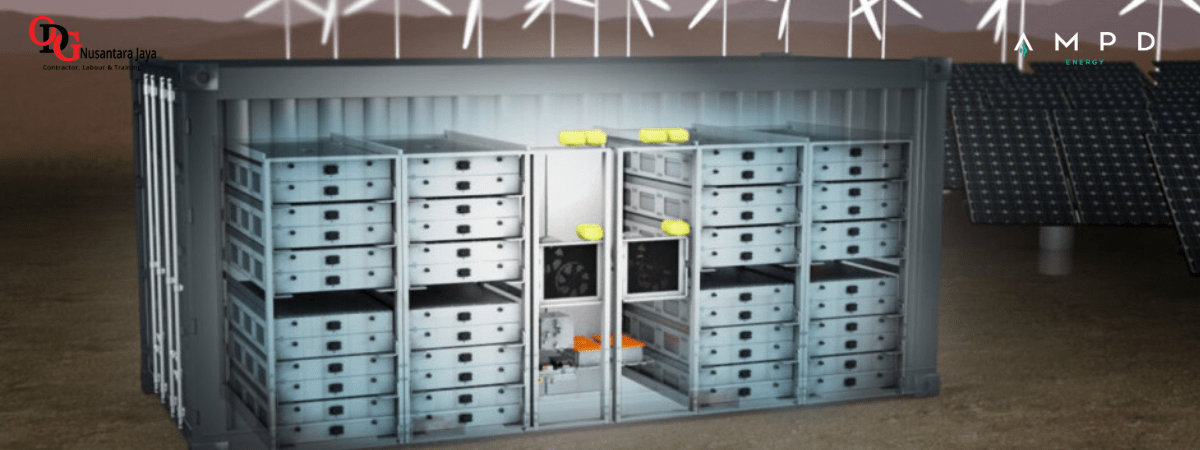
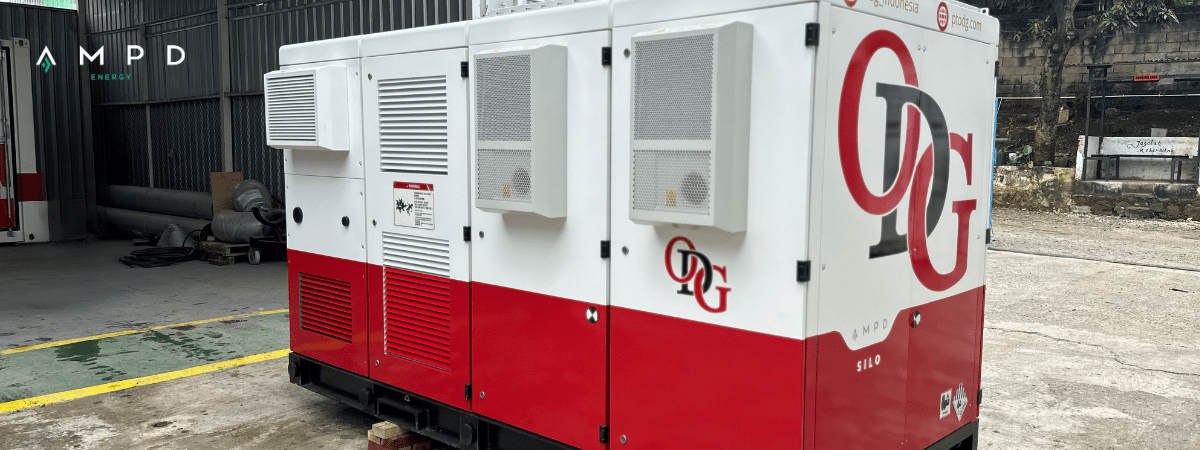
AMPD Energy can support pipe jacking operations as an energy storage solution.
A hybrid configuration can combine PLN, generators, and BESS.
Layer 1 — Primary Power and Grid Buffer
PLN or a generator can provide the project’s primary power.
AMPD can operate as a buffer for changing load conditions.
This configuration helps maintain power quality for sensitive equipment.
BESS can also reduce peak demand from the generator.
Layer 2 — Seamless Backup
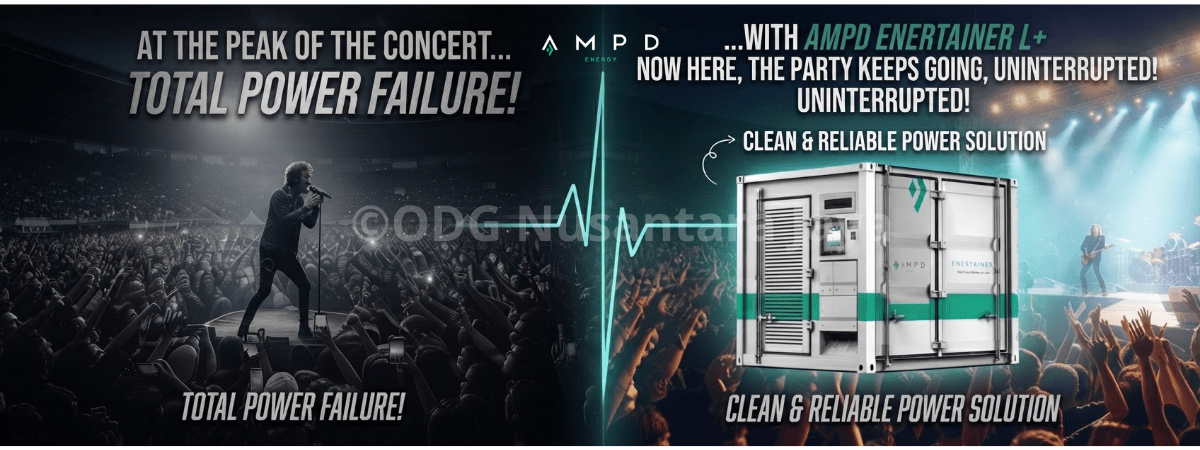
When the primary power source fails, BESS can take over the supply.
The system can respond within milliseconds.
Fast response helps protect continuity for critical equipment.
The jacking frame and control system can remain powered.
Slurry pumps also receive additional protection against power interruptions.
This helps reduce operational disruption during boring cycles.
Layer 3 — Overnight Standby
A standby load of around 60 kW can use stored battery energy.
The generator can shut down when site demand becomes low.
This strategy can reduce fuel consumption during overnight periods.
Nearby communities can also benefit from reduced generator noise.
AMPD Configuration Options
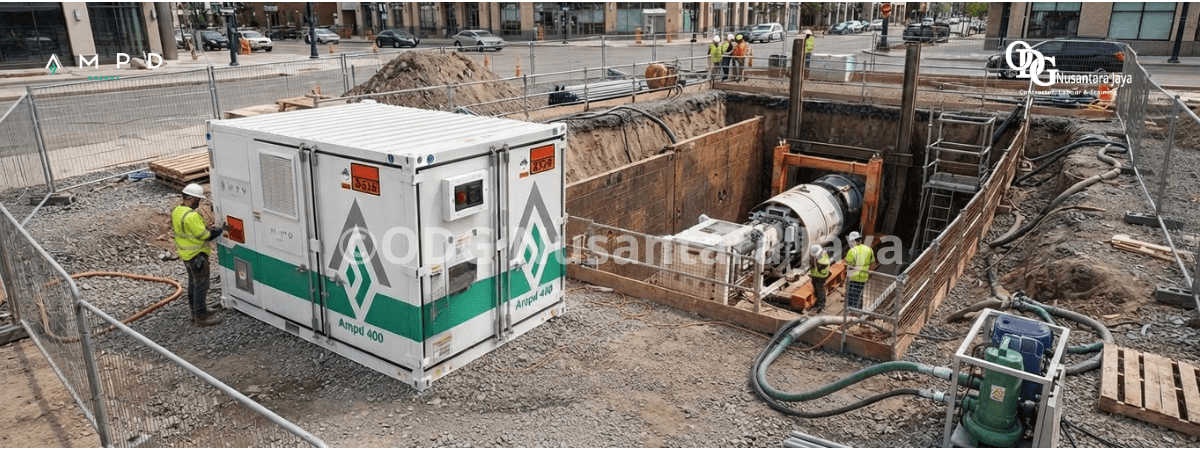
For a profile of approximately 566 kW peak and 385 kW continuous, AMPD 400 can be considered.
This configuration focuses on peak shaving and backup power.
AMPD 400 provides overload capability of approximately 595 kVA or 904A.
This capability can support motor starting requirements for selected equipment.
For more complex requirements, AMPD 400 can operate with AMPD 200.
This configuration supports hybrid operation and overnight standby.
AMPD 200 provides approximately 215 kWh of energy capacity.
This capacity can support a 60 kW standby load for several hours.
The combination also provides additional redundancy for critical operations.
One unit can support continuity while another unit undergoes service.
Estimated OPEX savings can reach approximately 30–35% under certain configurations.
Hybrid operation with overnight standby can provide higher savings potential.
Actual savings depend on the project’s load profile and operating pattern.
An energy assessment remains necessary to determine the optimal configuration.
Zero Noise and Zero Tailpipe Emissions
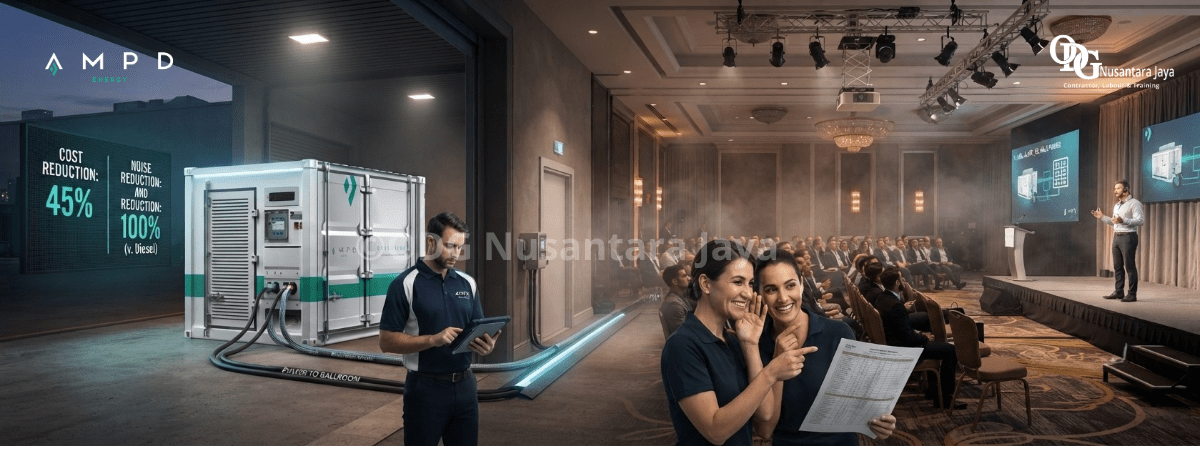
One major BESS advantage is quieter operation.
Battery mode produces no tailpipe emissions like a diesel generator.
This benefit is highly relevant for projects near residential areas.
Contractors can reduce noise disturbance during construction activities.
BESS can also support project sustainability and HSE objectives.
Energy monitoring can provide real-time power consumption data.
This data helps contractors prepare energy reports for project owners.
Monitoring also helps evaluate operational efficiency throughout the project.
Power Reliability to Prevent Costly Downtime
In pipe jacking projects, power is more than a supporting utility.
Power continuity directly supports the entire construction process.
One power failure can disrupt the jacking cycle and project schedule.
The interruption can also increase rework risks and additional costs.
Downtime costs can exceed the cost of the power system itself.
Therefore, contingency planning should become part of project planning.
Power supply pipe jacking requires a solution capable of handling these conditions.
BESS provides an alternative for improving reliability and reducing diesel dependence.
Prepare the Power Strategy Before Construction
Pipe jacking and microtunneling require power solutions based on actual site conditions.
Load profile, operating hours, peak demand, and standby load require proper assessment.
AMPD Energy can support hybrid power strategies for these requirements.
BESS can improve continuity, reduce fuel consumption, and minimize noise.
For pipe jacking and microtunneling projects in Indonesia, power planning should start early.
PT ODG Nusantara Jaya can help evaluate project power requirements and suitable BESS configurations.
Whatsapp : +62 811-8111-3032
Email : sales@protk.co.id